Victory for the Swiss ruling class

The Young Socialists ( social democrats ) in Switzerland tried to limit the amount of money a manager can earn. The youth-wing of the Social-democratic Party of Switzerland created a public referendum, to put an end to the enormous salaries many top executives get in the Swiss Confederation. Many workers are not happy with the capitalist system, so the young social democrats hoped that Swiss workers would vote in favour of limiting, the wages of top executives. But they underestimated the might of the capitalist media and their grip on the Swiss people. The Swiss Federal Council opposed them, all major newspapers called it ''foolish''. The Business Paper said the Young Socialists want a ''North Korean'' style economy. Just another lie spread by the papers of the rich, since the social democrats only want to regulated the amount of money top executives can get!

65% of the people who voted, were not in favour of limiting the salary of the top executives. The capitalist media had done its work. With fear and classic capitalist propaganda the capitalists claimed that a limit on salaries would ''destroy'' the economy. ''Salaries are not to be regulated by the government'' the capitalist media and their allies yelled. Most voters agreed with this and we revolutionary socialists understand why. Because Switzerland is a very capitalistic nation. Capitalism has been brainwashed into the Swiss since the confederation was founded. To limit capitalism means ''evil socialism'' and a ''inefficient economy''. This is what the right-wing told to the Swiss people!

The Swiss are known for their direct democracy. This time direct democracy was in favor of the capitalists who used the Swiss Federal Council and the whole media to intimidate the voters. Limiting the salaries of the business elite is anti-freedom the right-wing cried. The left-wing opposition was not able to spread enough propaganda, this is understandable since most media outlets in Switzerland and in private hands. They are paid by the Swiss ruling class to spread pro-capitalist propaganda!

This is why the media is not to be controlled by capitalist interest. The rich use their media very well and it is a powerful tool. Thanks to mass media, the ruling class can spread their ideals among the population. Opposition to the capitalist media is very difficult, because creating a media networks costs money. Since the revolutionary left-wing is not rich, it lacks the money to create newspapers. In all of Europe there are not socialist television networks, no major socialist newspapers who have more then 1 million subscribers. Meanwhile the pro-capitalist newspapers are mighty, thanks to the money of the ruling class!

Switzerland is a direct-democracy, but the capitalist class have shown that they can be dictatorial. Because the Communist Party of Switzerland was banned in 1940. Hailed as a free nation by the bourgeois democrats, the banning of the communist party has escape the eye of historians. Like many communist parties the CPS was founded after the Russian revolution by revolutionary socialists who opposed the reformist line of the social democratic workers parties. Led by Fritz Platten, the Swiss revolutionary socialists founded the Communist Party of Switzerland. Platten was also responsible for bringing Vladimir Lenin back to Russia in 1917 and it was Fritz Platten who saved his life on 1 January 1918!

Lenin and Platten were both attacked by anticommunists early 1918. While driving in a car, Platten saw the attackers and shielded Lenin by pushing his head down. The bullets hit his hands, but Lenin himself was not harmed. Fritz Platten remained close to Lenin until he was arrested by the Stalinist police in 1930. Like many old communists, he would not survive Stalin's reign of terror. On 22 April 1944, the NKVD executed the man who saved the life of Vladimir Lenin!

The Swiss ruling class feared the communist party. So the Swiss Federal Council, the highest body of Swiss direct-democracy banned the communist party, because they wanted good  trade relations with the Nazi Germans. Four years later ( when Nazi Germany was losing the war ) a new party was founded called the Swiss Party of Labour. 20.000 Swiss workers joined up, but thanks to Stalinist dogmatism and anticommunism in Swiss society, the party became isolated and never became a mass party of the working class. In 2007, the Swiss Party of Labour lost its only seat in the Swiss Federal Council. Although the party is known as Swiss Party of Labour in the German and French speaking parts of Switzerland, the Italian Swiss call the party; Communist Party. This is because anticommunism was never strong in Italy and so the name Communist Party was kept for Italian speaking Swiss!

Today the Swiss Party of Labour still stands in opposition to capitalism. But their Stalinist ideology has not changed. The party is still positive about the ''socialist'' experiments in the USSR. Also Cuba is fully supported by this communist party. Because they keep calling the USSR ''socialist'' and their uncritical support of Cuba, the Swiss Party of Labour remains weak and small. But this is not only their own fault. Most workers in Switzerland have a good income and have not yet felt the hardness of capitalism. Also capitalist propaganda has been very successful in keeping class struggle to a minimum. Revolutionary socialists say that although Switzerland has a direct democracy, this democracy is limited to politics only. The economy is owned and controlled by mighty Swiss corporations, who's greed is internationally known!


The Young Socialists ( social democrats )
tried to limit the salaries of top executives!
Unfortunate the Swiss voted against it!

Cuba still standing against the USA

As the BBC and other capitalist news networks love to say; ''Castro's communist system has failed''. Since Fidel Castro called Cuba a ''socialist'' republic, the supporters of capitalism have done almost everything to portray him and his Communist Party of Cuba in the worst way. Unlike the state-capitalist Chinese Communist Party, the Communist Party of Cuba remains popular with the people of Cuba. This is largely due to the role of US imperialism, that is still keeping the island under an economic embargo. Although US imperialism is trading with ''communist'' nations like China and Vietnam, Cuba remains locked in that unfair embargo the USA created in 1962!

For us revolutionary socialists, the Republic of Cuba is not socialist. We call it a deformed workers state, a nation with a planned economy but with no workers democracy. Cuba is a bureaucratic single party society, only people supportive of the Communist Party of Cuba are allowed to participate in elections. There are opposition parties, but they are not allowed to campaign for their ideals. If they would do so, they could get banned and their members jailed. So there are political parties in Cuba, but only the Communist Party of Cuba has the right to rule the nation!

This has always been opposed by revolutionary socialists. You cannot build a socialist society on a single party state. We see this in Russia were the degeneration of the Soviet revolution led to the rise of Stalin and the final collapse of the USSR in the 1980's. The Cuban revolution was able to survive, because of Castro's charisma and the fact that the island is still under siege from US imperialism. But the collapse of stalinism forced Castro to adopt some capitalist laws. With the dollarisation of Cuba ( authorized in August 1993 ) the dollar became Cuba’s principal currency for traded goods and services, as it had been during the first years of the 20th century. The Cuban Peso remained in use for salary payments, for all purchases on rationing and internal transactions of the government!

Today there is a gap between the Cubans who work for the state and those who work for private owned hotels and other capitalist enterprises. State workers receive a very low income of only 30 dollars a month. The minimum-wage is only 19 dollars a month. But Cubans who work in the tourist sector are paid in dollars and belong to the petty bourgeoisie of Cuba. Although Castro and the Communist Party of Cuba do not want to admit it, there is a gap between the poor working class and the better paid party bureaucrats. This is a huge blow in the revolutionary pride of many Castro supporters, who still have the illusion of a socialist revolution!

We revolutionary socialists never supported the capitalist reforms of Fidel Castro after the collapse of the USSR. Had he followed a democratic socialist route, then the trade embargo of the USA would have been lifted. The only reason why it is still in place is because of the Cuban single party state, this is why US imperialism is keeping the embargo. A democratic socialist Cuba would expose the anti-democratic nature of the USA. But Fidel Castro did not want a socialist democracy, because he held on to the Stalinist believe, that all political parties who oppose the vangaurd party support a capitalist counter-revolution. This paranoia is the reason why Stalinist leaders started to oppress others!

Fidel Castro ruled not like Joseph Stalin or Mao Zedong. Unlike them he is not a power hungry bureaucrat, who's lifestyle stands in opposition to his propaganda. But this does not hide the fact that some say he live's a conformable live, not that of a Cuban worker who earns 30 dollars a month. This we understand since Castro is not a genuine socialist, but more like a Cuban nationalist with some Stalinist elements. There are stories that he spends his retirement in a closed compound with guards. Consider the fact the US imperialism tried to kill Castro ( as the CIA would admit after the Cold War ), it is understandable that he needs protection!

Between 1959 and 1976, Castro was prime minister under the old constitution of 1940. After 16 years of extra-constitutional rule, the government institutionalized the ''socialist'' revolution and created the 1976 Cuban Socialist Constitution. The office of president was giving to Fidel Castro who became president. Osvaldo Dorticós Torrado was the Cuban president from 1959 till 1976, but his position was more ceremonial as prime minister Castro was the head of state. He would remain president until 2008, when he left the office to his younger brother!

Raúl Castro always stood into Fidel's shadow. Finally in 2008, he became Cuba's head of state. Fidel Castro was then 82 years old, his brother Raúl was 77 years old. The Castro brothers were elderly now, but showed not signs of turning over political power to a younger generation. True power in Cuba always laid with the Castro's. Even the Communist Party of Cuba never challenged their rule, not in 1976 and not in 2008. Today in the year 2013, the old men of the party still rule. Raúl Castro has started with major reforms. Cubans are now allowed to sell and buy houses, also many Cubans are told to become entrepreneurs. These reforms reached their peak when the government of Cuba, claimed the their system no longer worked and needed these reforms. The western capitalist media took this as a sign that ''socialism'' failed too in Cuba. But the 87 year old Fidel Castro, claims that Cuba will always remain ''socialist''!

Meanwhile the anti-Castro Cubans still hate the revolutionary government. They claim tofight for ''freedom'' and ''democracy'', but in reality they want a Cuba that hates leftists. Most Cuban exiles were part of the old bourgeoisie, who were forced to leave after 1959. Some turned terrorist and started a campaign to murder Fidel Castro. A famous story of anticommunist terrorism, is that of Cubana Flight 455. This airliner was destroyed in midair by a bomb. 78 people were killed by Freddy Lugo and Hernán Ricardo Lozano, two Cuban born anticommunists. Another famous anticommunist is Luis Posada Carriles. He worked with the CIA against Castro and also bombed a Cuban hotel in 1997, in order to put fear into the minds of tourists. But the Cuban exiles have more hero's. The 1500 anticommunists who tried to invade Cuba are also hailed as ''freedom fighters'' and defenders of ''liberty''. US imperialism is aiding the Cuban exiles with enough money to spread anticommunism, all in the name of ''liberty'' and ''democracy''!

Revolutionary socialists call for an end to the economic embargo and the single party state. Cuba must become democratic socialist and this can only happen if the Communist Party of Cuba allows opposition parties. Then we can see if Castro remains popular, then he has the legitimacy to govern the island. But the role of the USA is criminal and their embargo is proof of their hypocrisy. American imperialism was humiliated when Fidel Castro defeated the 1500 anticommunists send by the Americans. When he supported left-wing groups against dictatorial allies of US imperialism and when he stood up to the crimes of American capitalists. This is why Fidel Castro is hated. Not because of Cuba's single party state, because the USA loves pro-capitalist dictatorships like Saudi-Arabia. No, Fidel Castro and the Communist Party of Cuba are hated because they refuse to bow down to the USA!

But capitalist reforms are happening. Supporters of Raúl Castro can say whatever they want, but Cuban stalinism is dying. Young people have little interests in joying the Young Communist League. Most only join so they get privileges. Because this is common to every Stalinist state. The members of the ruling communist party enjoy privilege. Members of the Communist Party of Cuba can get higher salaries and better jobs. This is also why many youth have no love for the Communist Party of Cuba. They look at Raúl Castro and see an old man who is 82 years old, dogmatic to an deformed ideology that does not grant them the freedom to criticize the government!

A capitalist restoration is possible under a democratic system, if there is no genuine workers party. We saw this in the USSR were the capitalists were able to destroy the Soviet economy, forcing 40% of all workers into poverty. In Cuba this could happen too if a capitalist democratic party win the elections. It remains to be seen if there is a future for the Communist Party of Cuba under a democratic system. But it is not impossible because in the Czech Republic, the communist party remains the third biggest party in the parliament. This despite anticommunist lies and propaganda, despite all the attempts by the Czech government, to brainwash the population with anticommunism!

The Republic of Cuba is still standing on the old Stalinist legacy of a centralized single party state. Many western leftists from the communist parties hold on to their illusion that Cuba is a ''socialist'' nation. They are blind to the abuse of human rights in Cuba, like the arrests of workers who go on strike. Cubans who dare to criticize the Castro brothers face intimidation and arrests. The Communist Party of Cuba has a strong base of support, but they use their supporters to intimidate the few who speak out. Supporters of the communist party spread lies about us revolutionary socialists, claiming that we support a capitalist restoration in Cuba. Also they claimed we support the USA against Cuba. With these lies the Castro supporters only fuel the anticommunist propaganda machine of the ruling class!

Today the communist parties in the world are very weak. The final collapse of the USSR has caused massive disillusionment among the political left-wing. Revolutionary socialists always said that their ''socialist people's republics'' were based on Stalinist totalitarianism. But in their blind idealism they worshiped people like Castro, only to see their ''socialist bastion'' introducing capitalist reforms after 1993. Many claim it was necessary for Cuba to do, but we revolutionary socialists say that there are alternatives. Alternatives that the Communist Party of Cuba never considered, because they base their believes on the Stalinist lie that the party must control everything, from the state to the lives of the people!

Our alternatives are:

- A free workers council based democracy ( Soviet-democracy or Council-democracy )
- Legalization of opposition political parties
Legalization of free trade unions
- Legalization of free newspapers 
- An end to the 1976 constitution that give the communist party the monopoly on power 
- The establishment of workers self-management in state enterprises 
- The release of all political prisoners


Cuba needs a socialist democracy!

South Korea, return to dictatorship!

The corrupt Republic of Korea is again showing its true colors. Now the conservative anticommunist government wants to ban a leftist party called the Unified Progressive Party. Since the introduction of democracy in 1987, the South Korean state has become more tolerant. However the Constitutional Court still has the power to ban a political party, if a majority thinks this party is a danger to the Republic of Korea. Conservative anticommunists claim that the Unified Progressive Party is a supporter of North Korea. In reality this is just another attack on freedom of speech. The conservatives never liked the freedom for leftists to oppose the capitalist nature of South Korea. More then 150.000 South Koreans were killed by anticommunist killers commando's under orders of Syngmann Rhee in 1950. South Korea was a totalitarian dictatorship from 1948 till 1960 and then a military dictatorship until 1987!

South Korea is not a true democracy. The anticommunist government is allowed to arrest every South Koran who says he/she is opposing the Republic of Korea. As a South Korean you are not allowed to oppose the ROK, doing so makes you a ''North Korea sympathizer''. The South Korea military dictatorship that ruled from 1960 till 1987 used anticommunism as a excuses to hunt down opposition members. From liberal democrats to socialists and communists, all were hunted and tortured by the criminal KCIA ( Korean Central Intelligence Agency ). American presidents gave full support to the dictatorship of the militarists and loved the anticommunist nature of the Republic of Korea!

The Unified Progressive Party is not anti-capitalist nor revolutionary socialist. Born out of a fusion between left-wing nationalists and trade unionists, the UPP has six members elected into the Parliament of the Republic of Korea. These six representatives can be arrested if the Constitutional Court bans the party. All supporters of freedom of speech, must oppose this attack on the basic freedoms in South Korea. The anticommunist government is criminal and shows that democracy is only good when it serves capitalism and the rich!

Lee Seok-ki is a leftist lawmaker and got arrested, the South Korean government said he was part of an anti-ROK organisation called the ´´Revolutionary Organisation´´. He is a member of the Unified Progressive Party and now the government wants to ban this party, because Lee Seok-ki and few other members are called ''Pro-North Korean''. That would be like banning the Republican Party of the USA, because few of its members are racists and support Christian fundamentalism. It is true that many leftists in South Korea have a pro-North Korea position because they hate US imperialism and the capitalist nature of the ROK. Many leftists are still intimidated and discriminated in South Korea. In their anti-imperialism some have developed the idea that North Korea is the better Korea because of its anti-imperialism. Very foolish to think, but understandable consider the anticommunist paranoia of the South Korean government!

Again the Unified Progressive Party is not anti-capitalist or revolutionary socialist. This party is leftist nationalist and progressive democratic. Some of its members maybe more radical, but the party has never supported a workers government or a socialist economy. This would mean political suicide since any revolutionary socialist party in South Korea, would be intimidated and called ''evil'' by the anticommunist media. It is because of this paranoia that the ruling conservatives still win elections. Brainwashing the workers of the south since 1948 with anticommunism, the south is the opposite of the North Korean dictatorship. Were Kim Il Sung poisoned the Koreans with his Stalinist-Juche ideal, the South Korean presidents used totalitarian anticommunism to create a anti-leftist climate!  

Now the conservative government is ready to ban the Unified Progressive Party. If they get the support from six of the nine judges of the Constitutional Court, then the government is allowed to take all the wealth of the UPP to prevent the creation of a new party. It would mean a great victory for anticommunism if the Unified Progressive Party is banned. But also a victory for US imperialism since the UPP is a major opponent of American soldiers in South Korea. By banning the only major opposition party to US imperialism, the South Korea ruling class can relax in the knowledge, that their power-structure remains unchallenged! 


Lee Seok-ki arrested for being a ''DPRK sympathizer'' as the government claims
Many leftists were jailed this way between 1948 and 1987!

Revolutionary socialist; Kshama Sawant ELECTED!

Richard Conlin, a Democrat and candidate for the Seattle City Council has capitulated before his socialist opponent Kshama Sawant. Collin was able to raise more money and was backed by the corporate elite of Seattle. But in the end Kshama Sawant was able to defeat this ´´progressive´´ liberal in the city of Seattle. Sawant campaigned as a genuine revolutionary socialist, in opposition to the capitalist Democrats and their corporate supporters. With this huge victory, the Seattle Democratic establishment has been dealt a huge blow in the face. A revolutionary socialist is elected into a American city council, for the fist time in almost 100 years! 

Another revolutionary socialist called Ty Moore was campaign for city council in Minneapolis. He was not elected but gained the support of many people. Showing the right-wing establishment, that Americans are willing to vote for genuine socialists. Alondra Cano a Latino American and progressive member of the Democratic Party, was able to defeat Ty Moore. But only with 229 votes. Moore has criticized Cano, specifically, for a mailer distributed on her behalf by the National Association of Realtors. The lobbying group is based in Chicago and believed by some to be largely responsible for the collapse of the housing industry! 

The American; Democratic Party is seen by many ( none-socialist ) leftists as a progressive party. But in reality this party is right-wing, pro-capitalist and not progressive. We only have to look to president Obama, a conservative liberal who has not damaged or limited the power of corporate capitalism. Obama promised changes, but these changes never came. Worse he tried to make compromises with the party of greed, exploitation and Christian fundamentalism. The Democratic Party might have some progressive members and a few social democrats. But the top leadership is conservative capitalist and only progressive when it is time for elections!

Kshama Sawant and Richard Conlin fought a big battle. Conlin is a veteran member of the Seattle City Council, serving for almost 16 years. Although called a ´´progressive´´ he has been very generous to the capitalist establishment in the city. Also he opposed a minimum-wage for workers. This was a key issue, because Sawant campaigned for a minimum-wage of 15 US dollars. Conlin opposed this, claiming it would hurt the economy. Yet for a ´´progressive´´ to take side with the capitalists was not good propaganda. The capitalist establishment all joined forces to prevent the elected of Kshama Sawant, who was called ´´dangerous´´. She had to fight the establishment with 50% of Richard Conlin's budget. While he was able to raise 210.000 dollars, Sawant was forced to campaign with 110.000 dollars!

The race for the Seattle City Council seat became very hot as Sawant closed in on Conlin. In the last polls he was still leading with 51% to 49% for Sawant. But the revolutionary socialist was winning more votes. Finally on 15 November, Richard Conlin veteran of the city council, concedes to a 41 year old Indian-American economics professor, who is also a member of Socialist Alternative ( CWI ). Research showed no socialist candidate had won a citywide office in the past 100 years. The last socialist candidate to make it into the general election was in 1991 and was defeated, said Scott Cline, the city's archivist!

Ty Moore and Kshama Sawant have both shown that socialists can get elected into the heart of anti-socialism on planet Earth. US imperialism might still be poisoning the minds of millions with anti-socialist propaganda, but many Americans are waking up. The Democratic Party is losing its monopoly on the leftist voters. Alondra Cano has defeated Ty Moore, but the victory of Kshama Sawant proofs that victory is possible. Revolutionary socialists can celebrate as socialism is about to be rediscovered by the American working class. The capitalists still rule the USA and the minds of almost all Americans. But their anti-socialist propaganda is no longer absolute. Americans are questioning the claims that capitalism is good and socialism is evil!

Still a genuine workers party must be build. A party in opposition to the Democratic Party and the ultra-conservative; Republican Party. This is the task for all revolutionary socialists in the USA. Sectarianism must be avoided, because this will only aid the capitalist establishment. A workers party on a socialist program can win the votes of many workers. Socialist Alternative members in Seattle and Minneapolis have shown this!


15 dollar an hour was refused by Richard Conlin,
he lost the battle as workers voted for Kshama Sawant

Geert Wilders and Marine Le Pen

Geert Wilders, leader of the national conservatives in the Netherlands got a special visitor from France. Marine Le Pen, daughter of Jean Marrie Le Pen and leader of the French; Front National visited the Netherlands. Both Wilders and Le Pen share something, their hatred of Islam and Muslims. The Party of Freedom and Front National both think that Islam is the biggest danger to European democracy and both also share a deep hatred of the political left-wing. Wilders call this the ´´leftist church of multiculturalism´´.

The Party for Freedom ( PVV ) is a relative new party in the Netherlands. Founded in 2006 it has only one member and that is Geert Wilders. The party has no members and no democratic structure. There are no congresses and all political decisions are made by Wilders alone. Some who worked for the PVV wanted a democratic structure, but Wilders removed these people from HIS party. Because that is the PVV, it is his party. Geert Wilders is the only leader and party member!

Front National is different in both structure and ideology. While Wilders and his PVV are mostly conservative and anti-Islam, Front National was also very anti-semitic. Jean Marrie Le Pen was convicted of racism and sentenced twice by the French courts. When he was younger, Le Pen joined an anticommunist gang who attacked members of the French Communist Party. He supported the killing commando's in Algeria and remains a die hard French nationalist!

After 1992, the European Union became the new enemy of Front National. Although the party used to be pro-capitalist in the days of the Cold War, Jean Marrie Le Pen turned from free market capitalism to protectionist capitalism. In the last 23 years the FN says it wants to protect French capitalists against cheap products. Also the party hates foreing immigrants who they claim ´´steal´´ French jobs. In reality it is the French ruling class who abandon the working class. The same class that Front National is very supportive of!

Geert Wilders is also a supporter of capitalism. But he hides this under right-wing populism. Wilders claims that he stands alone against the power of the ´´leftist´´ political elite and ´´leftist´´ media. By blaming the left-wing for the failures of capitalism, many Dutch felt he was their man. Since the Netherlands lacks a genuine workers party, the political left had no answers for Wilders. Most leftist parties in the Netherlands have turned massively to the right-wing and support now pro-capitalist politics. Also the social democrats and greens are the ones called elitist and this is true. Most social democrats and green politicians live on a luxurious salary of 106.000 euro a year, while many Dutch are struggling with rising rents, higher taxes and massive job loses.

Now the PVV and FN are working together. A Zionist party and a party that opposed Zionism and Jews in the past. Marine Le Pen might have changed the FN, but its legacy of a right-wing nationalist antisemitic party is not lost. The Danish People's Party remembers this and is not happy with the new friendship between Le Pen and Wilders. The Danish nationalists are also ideological friends of the PVV, but they choose to support Israel and they hate nationalists with a fascist antisemitic agenda. Front National and the Danish People's Party are not friends although both are right-wing nationalist!

Revolutionary socialists oppose both Wilders and Le Pen. The only reason they gain support is because the left-wing is not providing a socialist alternative. Leftists in Europe are either social democratic, moderate socialist or old style Stalinist. There are very few revolutionary socialist parties in Europe. This is why the left-wing does not have the alternatives, because most European leftists are limited to a ideology of more state and less market. Some call for a ´´social Europa´´, others like the Dutch; Socialist Party want more power for national governments. But almost no major left-wing party in Europa calls for a socialist revolution and a democratic planned economy. Only the few revolutionary socialist parties of the Committee for a Workers International voice this.


Marine Le Pen on a tour of the Dutch parliament
Geert Wilders is her tour guide!

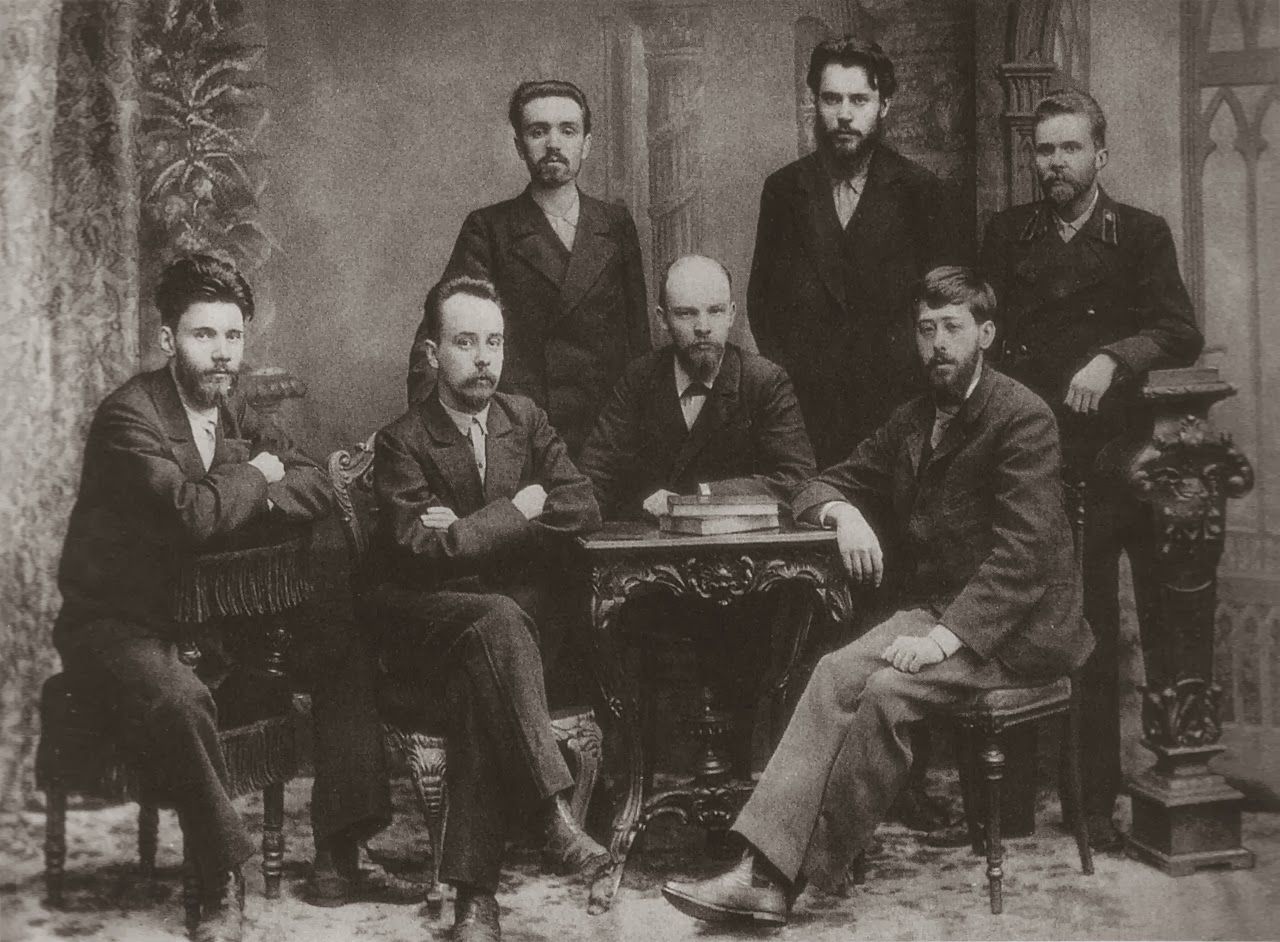
The Russian Social Democratic Workers Party

The Russian Social Democratic Workers Party or Russian Social Democratic Labour Party was a revolutionary/reformist socialist party in Imperial Russia. Until 1912, the party was divided between a revolutionary socialist majority called Bolsheviks and a reformist socialist minority called Mensheviks. Vladimir Lenin became leader of the Bolsheviks and led the Russian Social Democratic Workers Party ( Bolsheviks ) after the split. The Mensheviks supported a parliamentary democracy and the rule of the bourgeoisie. Lenin and his revolutionary socialists wanted the rule of soviets ( workers councils ). 

In 1883 there were many socialist groups in Russia. From revolutionary Marxists, to socialist nationalists and supporters of a agrarian socialist revolution. The RSDWP was the result of unity among many groups and the first workers party in Russia. However the Russian Empire was a absolute monarchy and Czar Alexander Romanov ruled with iron fist. The RSDWP was illegal and could not operate free until 1917. All nine founders of the party ended up getting arrested by the czarist secret police!

Vladimir Lenin joined the party at age 32. Impressed by his work he was allowed to join the party and soon became a senior member. Just before the Second Congress of the RSDWP he wrote ''What to be Done'' in which he argued for a vanguard party to led the working class. Not all members of the party accepted this. The party debated over this and split between three factions. Vladimir Lenin and Julius Martov stood against each other in many debates. A third fraction was led by Leon Trotsky, who disagreed with Lenin at first and believed that workers do not need a vanguard party or an alliance with the poor peasantry!

During the third congress in 1906, the Russian Social Democratic Workers Party was reunited. The supporters of Lenin were called the majority or Bolsheviks, while the supporters of Martov were called the minority or Mensheviks. During the second congress, the supporters of Lenin and Martov caused the split, which divided the party for four years. The third congress reunited the party and gave the Mensheviks a majority of supporters, but only for a short time!

Martov's Mensheviks had great hopes for the capitalist democrats in Imperial Russia. They believed that the parties of capitalism would install a bourgeois democracy, the first stage needed for socialism according to them. This is why the Mensheviks supported the Constitutional Democratic Party, a capitalist liberal party that was legalized in 1905. After the Russian Empire crushed the 1905 uprising and jailed the members of the newly formed soviets, Lenin had enough of Martov and his support for a bourgeois democracy. It is ironic that many Stalinist communist parties would later follow Martov's believes that a capitalist democracy is needed before socialism. This is why many communist parties joined capitalist governments after 1945!

The fourth congress of the RSDWP was held in London. Because it was almost impossible to operate in Imperial Russia. Lenin's supporters were able to dominate the congress and got the majority of votes. The debates were focused around the need for a socialist revolution. Lenin supported a revolutionary uprising against the czar and the use of violence. Martov opposed violence against the czarist regime and wanted a pacifist revolution. But since most members of the party knew the hardness of the czarist state, they supported Lenin on the revolution debate. But Martov was able to win a debate over the use of bank robberies and attacks on police stations. The party voted to end these attacks, even while Lenin wanted to continue them! 

Still the ideological differences could not keep party unity. The Bolsheviks wanted a socialist revolution and the establishment of a workers state. While the Mensheviks opposed this and favoured a evolutionary road to socialism. They also wanted a capitalist democracy first and believed that socialism was not possible in Russia. From a pure Marxist point of view, Martov was right. Russia was not ready for a socialist revolution. The workers were a minority and made up only 20% of the Russian work force in 1912. Most Russians were peasants and the bourgeoisie was still very weak compared to Great Britain and Germany!

The RSDWP finally split in 1912 in two parties. One reformist socialist RSDWP and one revolutionary socialist RSDWP. Lenin's party and Martov's party both kept the name Russian Social Democratic Workers Party. Trotsky's fraction did not joined either Martov's party or Lenin's party. It would not be until 1917 that Trotsky made the choice to support Lenin. 

Although the Bolsheviks and the Mensheviks were the parties of the working class, their popularity with the peasants was not that high. Many peasants supported the Socialist Revolutionary Party. This party was founded in 1902 and supported a agrarian socialist society. Unlike the RSDWP the SRP believed that the peasants should led the revolution. Also the socialist revolutionaries believed in individual terrorism against the czarist state. The Bolsheviks opposed this individual terrorism as it did not aid the socialist revolution. It only made the czarist state more brutal in hunting down opponents!

In February 1917 the Russian Empire was dissolved. A bourgeois Provisional Government made up of socialist revolutionaries, constitutional democrats and moderates was set up. The left-wing of the SRP opposed the Provisional Government and like the Bolsheviks they supported the soviets ( workers councils ). After many debates the Socialist Revolutionary Party split into a pro-bourgeois wing and a pro-soviet wing. The SRP supporters of the Provisional Government were led by Alexander Kerensky, prime minister of the Russian Republic since July 1917!

Martov's Russian Social Democratic Workers Party was divided about the Provisional Government. Three Mensjeviks became ministers in the cabinet of Alexander Kerensky and this made Martov's party part of the capitalist government. Lenin's party faced the same debate. Lev Kamenev and Grigory Zinoview supported the Provisional Government. They were powerful members of the party and Lenin had to debate them almost every time. Finally he was able to win the Central Committee over. The RSDWP ( Bolsheviks ) now called for the rule of soviets and opposed the Provisional Government!

The Provisional Government promised the western capitalist nations to keep on fighting in the first world war. But many Russian had enough of this war and by November 1917, the soviets were dominated by the Bolsheviks who won the majority of votes. The capital of Russia at that time was not Moscow, but Petrograd ( Saint Petersburg ). It was here that the local soviet called for the removal of the Provisional Government. Red Guards assaulted the Winter Palace and arrested the ministers. Julius Martov was very opposed to this and he left the Soviet of Petrograd with his supporters. With the arrest of the capitalist ministers the Provisional Government was gone. It was replaced by the Congress of Soviets who elected Lenin as chairman and Leon Trotsky as people's commissar of defence!

Julius Martov opposed the closing of the Constitutional Assemble of Russia and became an opponent of the Bolshevik led socialist revolution. Although he opposed the Bolsheviks and the rule of soviets, he did supported the Red Army against the Whites during the civil war. He hated the Red Terror and said; "The beast has licked hot human blood. The man-killing machine is brought into motion.... But blood breeds blood.... We witness the growth of the bitterness of the civil war, the growing bestiality of men engaged in it.". He also criticized the banning of newspapers who were critical of the revolution!

Lenin's Russian Social Democratic Workers Party took power after November 1917. They soon faced opposition from almost all capitalist and reformist socialist parties and groups. The Russian right-wing with support from western imperialism created the White Armies. These anticommunists got support from 200.000 western soldiers ( including 40.000 British ) send by the capitalist governments to crush Lenin and the soviets. Although the modern capitalist media claims that Lenin was a cruel dictator, he was not at all authoritarian at first. Lenin authoritarianism only came when the White Armies started murdering members of the Soviet government and supporters of the RSDWP ( Bolsheviks ).

In March 1918, the Russian Social Democratic Workers Party ( Bolsheviks ) renamed itself into Russian Communist Party. This was the first time since the death of Karl Marx, that a party called itself communist again. This was done to show that Lenin's party was a revolutionary communist party and a party of the socialist revolution. There was little violence after the revolution, but this was the silence before the storm. White Army forces soon started with their White Terror, murdering and killing at random. Lenin did not choose for terror, he was forced into it by the civil war and the terrorist attacks of the Socialist Revolutionary Party. This became clear when Lenin himself was almost killed by a terrorist of the SRP. On 30 August 1918, Lenin spoke at a factory and was shot after leaving. He survived the attack, but realized that his revolution was in danger of collapsing to terrorism and invasion!

The Red Terror was launched to arrest and eliminate enemies of the Soviet government. Julius Martov was a opponent of this terror, but he was not the only one. Many Bolsheviks were not happy with the cruel way's of the Cherka, the secret police forces. But Lenin and Trotsky defended the Red Terror and said that the revolution has the right to defend itself against terrorism and foreign enemies. 

Unlike the parties who opposed the rule of soviets, the left SR and the pro-soviet Mensheviks were not banned after 1917. The Soviet government only banned them after they gave political support to enemies of the Russian Socialist Federative Soviet Republic. The left-wing of the Socialist Revolutionary Party opposed the Bolsheviks after the peace deal with Germany. This is why they started to use terrorist attacks on German officers and Soviet officials. The Mensheviks were not banned until after February 1921, when they gave political support to the Kronstadt uprising. Supporting the enemies of the revolution was the reason why they were banned. Revolutionary socialists say that this was their own fault, they choose to oppose the soviets and the Congress of Soviets in favour of supporting individual terrorism and anti-Soviet uprisings!

By 1922, the Russian Communist Party was the only allowed party in Russia. This was not done because Lenin wanted this since 1917, but because the opposition to Lenin was trying to remove him by force. The 200.000 invaders were welcomed by the opposition. A clear example of this we see in the capital of Azerbaijan, were British forces executed 26 Bolsheviks after the Mensheviks surrendered the local soviet to them. Japanese soldiers kept Vladivostok occupied until October 1922. It would not be until after 1920, that the western armies were pulled out of Russia, to stop workers from rebelling in Europe and the USA. This gave the Red Army an advantage, because the White Armies were poorly led, many generals fought to control the White movement. One of their best leaders was Alexander Kochlak, who was captured and executed in 1920. With his death, the White Armies lost the Russian Civil War. The last anticommunist strongholds were captured in 1923! 

In December 1922, the Union of Soviet Socialist Republics was founded. But Lenin and Trotsky would not be able to stop the degeneration of their party and revolution. Forces too powerful for them took command and created a totalitarian dictatorship. Was stalinism the result of leninism? Yes, say the anticommunists, liberals, conservatives, social democrats and anarchists. No, Lenin did what he had to do under the difficult circumstances. The Red Terror may have helped Stalin true, but win out the Red Terror the Soviet state could have collapsed to the White Terror. We known this because the White Terror would kill many communists in the 20th century. The most famous White Terror is that of General Suharto who killed 500.000 members of the Communist Party of Indonesia. This could have happened to Lenin's party too in 1918 and he knew this!  


Vladimir Lenin and Julius Martov before the split in 1912!

Chilean Presidential elections reflect move into a new era

The current Presidential election campaign, despite the large majority predicted for former Concertacion (“centre-left” coalition which ruled for over 20 years following Pinochet) President, Michelle Bachelet, reflects in many ways Chile’s entry into this new period.This year, workers and youth in struggle – in Chile and around the world - marked the 40th anniversary of the bloody military US-backed coup which brought down the Popular Unity government of Salvador Allende in blood. Much comment has been made on the significance of this anniversary, including by the Committee for a Workers International. However, today’s events in Chile, where Presidential and legislative elections will take place on 17 November, are giving this anniversary a new significance. The arrival of a new period of crisis, turmoil, struggle and instability is seeing the contradictions stored up following the coup and botched-up transition to “democracy” unravel, seemingly all at once.

By Danny Byrne and Celso Calfullan - Socialistworld.net

Contradictions of post-Pinochet era unravelling

Following Pinochet’s coup, Chile became the world’s laboratory for neo-liberal policies. The crushing of the workers’ movement and left by Pinochet opened the door to a series of brutal attacks. Thus, the struggle against it was tightly bound up with the struggle of the working class for rights and decent conditions, and therefore against Chilean capitalism: the dictatorship of the bosses and imperialism. The massive demonstrations and strike-waves which marked the last years of the dictatorship were seen by many workers as a way to take up anew the struggle begun in the 1970s for a socialist society. However, this process was tragically nipped in the bud, as the leaders of the workers’ and main left organizations succeeded in channelling these struggles along the path of “peaceful negotiations”, which established capitalist democracy without doing away with the dictatorship of the big bosses and imperialism. Workers and the poor were told that this transition would allow the election of left governments which would dramatically change the situation.

An indeed, November 17 will be Chile’s 6th Presidential election since the end of the dictatorship, out of which 4 have been won by Concertacion candidates. However, these 20 years of Concertacion governments have been 20 years of betrayal, during which the neo-liberalism of the Pinochet era was not only maintained, but often deepened. Pinochet’s constitution was maintained – he was even appointed Senator for life!

The last government of Bachelet – despite her nauseating attempts to emphasise her anti-dictatorship credentials - was no exception. Bachelet – daughter of an anti-coup military leader during Allende’s government killed by torture - did of course, struggle against the Pinochet coup and was even tortured herself following its triumph. However, she quickly forgot about this as she approached power. She did not touch Pinochet’s constitution or anti-worker laws. Her regime even employed “anti-terrorist” laws dreamt up under Pinochet against the struggles of the Mapuche people. Under her government more Mapuche (oppressed indigenous community) were assassinated by state forces than under the current right-wing government of Pinera!

Discredited political establishment and system, inherited from dictatorship

As one can imagine, patience with the Concertacion and the whole botched-up arrangement of post-Pinochet Chile began to wear out. Over 20 years later, this was given a distorted expression in the Concertacion’s first Presidential election defeat, with the victory of the right and Pinera. The Concertacion had so badly betrayed the struggle to change Chile following the dictatorship that the unthinkable – a democratic election victory for a supporter of the coup! – happened.

However, the right wing’s honeymoon was extremely short-lived, and Pinera leaves office as the least popular President since Allende (i.e. even less popular than the bloody dictator himself!). The main factor in this is the reawakening of the class struggle. However, this has generally not been accompanied by a recuperation of confidence in the Concertacion.
Indeed, the main development has been one of a massive disillusionment with the entire political establishment. For example, the last electoral date (municipal elections in November last year) saw over 60% abstaining! This phenomenon is especially strong amongst the youth. At the time of Pinera’s election 75% of young people had not seen the point in even registering to vote! Knowing this, it is no surprise that it is the youth – in the form of the massive and heroic student movement – which has been the chief protagonist in the explosion of struggle over the last years.

These explosive struggles have been marked by a massive rejection of the system, and have featured far reaching demands, including the abolition of the Pinochet constitution and the formation of a Constituent Assembly. The election campaign – even that of the bourgeois parties – reflects this. There is not one major candidate, from either the “left” of right, who does not call for either reform or abolition of the Constitution! This reflects the massive questioning and opposition which exists to the failed system established following the dictatorship.

The right-wing campaign has been split, partially reflecting the headache that the dictatorship represents for it. Alongside Evelyn Mattei, candidate of the Alianza, a second right-wing candidate, economist and TV personality, Franco Parisi, is also standing. He is running on a right-wing programme, but attempting to give it a “fresh face”, emphasising the need to break from an explicit association with the legacy of the dictatorship (despite inconvenient photos of him alongside Pinochet!). Parisi’s campaign, which has developed more momentum than many thought, even neck and neck with the official Alianza candidate in some polls, is another expression – albeit distorted – of the crisis of the regime.

The Bachelet phenomenon – towards a new government of crisis

Bachelet’s popularity would seem to contradict this picture, but this is misleading. First of all, her “high popularity” masks the massive majority which has no intention to vote for her, between those who will vote for others and those who will not vote at all. Moreover, her case is far more the exception than it is the rule.

A key factor which maintained stability during the post-Pinochet period was the economic growth which Chile experienced quite consistently, especially during the last decade. At the advent of the economic crisis, Chile’s boom seemed to continue unabated, surfing on the wave of the Chinese economy. However China has not been able to save the Latin American or Chilean economy from the impact of the crisis, which is now being reflected in a rapid slowdown. The reality is that many who look to the Bachelet years with a sense of nostalgia do so because the memories of the economic “success” which her government bring, and which formed the basis for the very limited miniscule social reforms which she implemented. 

However, the perspective for a Bachelet government in 2013 will not be the same, and her regime will be pushed into ever greater conflicts with the social majority. For the workers’ movement and left, this perspective is key to the breakthroughs which are possible and necessary over the next years. This in contrast to the shameful policy of the Chilean Communist Party leadership, which has chosen this moment, the worst imaginable, to finally fully throw in its lot with the Concertacion, which provoked a significant crisis and polarisation in its ranks, with some even leaving to join the ranks of the Marcel Claude campaign.

Bachelet and the Concertacion are preparing a new conjob. Her policy promises – which reflect the radicalisation in society and the pressure of the class struggle – such as for free education, a new constitution are intended to seduce voters, but by no means to be implemented. In this conjob, Bachelet will be facilitated by Chile’s anti-democratic electoral laws. In order to pass any significant legislation, a government requires a majority of either two-thirds, three fifths or four sevenths of congress, which Bachelet is almost certain not to achieve. Election promises such as free education, abortion rights, gay marriage etc, will thus be shelved with this as “justification”. A genuinely socialist government would not allow itself to be held in a straight-jacket by Pinochet’s laws, but would base itself on the mobilisation and power of the working class to defy capitalist law and transform society.

Many are speculating that Bachelet does not even want a majority which is so big as to expose her lack of will to act to change the situation! In the press in recent weeks, there have even been reports of a secret meeting between the President of the PS (part of the Concertacion) and a Senator from the Alianza, aimed at reaching a “deal” whereby Bachelet wins in the first round of Presidential elections, thus preventing an overly humiliating defeat for the right wing in a second round (if the official Alianza candidate can even get there!). The rotten leaders of the Concertacion need a “reliable” opposition, which makes the emergence of a real opposition force to its anti-worker policies more difficult to develop.

In the first explosions of the student movement, the hatred felt towards the political establishment was often translated into a crudely “anti-party” mood, elements of which can be seen in many countries from Europe to Latin America. While understanding this mood and its progressive origins in a rejection of the rotten parties of the past, revolutionary socialists also seek to overcome this mood, which represents an obstacle towards the development of the necessary political expression of the rising class struggle.
Rising tide of struggle

However, the lack of a mass political alternative has not stopped Chilean workers, oppressed and youth from developing their own opposition on the streets and in the workplaces. The student movement has brought numbers out on to the streets not seen since for over 20 years. It galvanised the opposition to the status quo throughout society and won support from all quarters of the working class. A new generation of activists has been steeled in struggle, facing the brutal repression of the infamous carbineros.

And the students have not been alone. In the South of the country, a massive rebellion saw authorities all-but expelled from entire regions, as communities united in strikes and blockades against price speculation and poor service provision. The significant industrial disputes of the last years are too numerous to mention, from precarious non-unionised workers in the retail sector, to the heaviest batallion of the Chilean proletariat, the copper workers.

And all of this has taken place despite the absence of any kind of lead being given from above in the main trade unions. Leaders of the once mighty CUT (main trade union federation) are now often as hated as the capitalist politicians among those in the front line of struggle. Only 3 months ago, port workers waged an inspirational struggle against attacks on wages and conditions. This struggle spread from one port to another, shutting down the sector across the country in a question of days, and the port workers do not even have a national union! As in many cases, workers and youth are struggling, and finding ways around the roadblocks erected by right-wing trade union leaders and the absence of a mass political voice of the working class.

Marcel Claude and the ‘Todos a la Moneda’ campaign

However, the Presidential election campaign of Marcel Claude, and the ‘Todos a la Moneda’ campaign in which Socialismo Revolucionario (CWI in Chile) is participating with members standing for both the Senate and regional councils, has opened the way for this absence of a political voice for the struggles of workers and youth to be overcome. The campaign seemingly emerged from nowhere, and has developed great momentum. Mass assemblies of the campaign have been organised throughout the country, with much participation by youth and student activists and organisations, indicating an important development of consciousness beyond a crude “anti-party” position and an acceptance of the need to engage in a political struggle. Indeed, among the youth, opinion polls show that Claude enjoys equal support to Bachelet among those below 24 years old! The campaign has galvanised support among all key sectors involved in struggle, from the tens of thousands in struggle against the unfair AFP private pensions system to the communities in struggle against poor provision of services, such as in Aysen.

Claude’s programme incorporates many of the key demands of these struggles, including the demand for free public education and healthcare, financed by progressive taxation and the re-nationalisation of copper and other natural resources. The campaign also demands the formation of a new Constituent Assembly, based on a process involving workers and young people’s organisations and social movements to draw up a new Constitution, replacing that of the Pinochet regime. Claude describes himself as an anti-capitalist, and correctly opposes any electoral deal with Bachelet, including any possible support to her in a second round against the traditional right wing.

However, while this programme represents a key step in the right direction and allows for a political struggle to develop to satisfy the demands of the workers and social movements, there remain important contradictions and insufficiencies within it. While defending anti-capitalism, Claude stops short of explaining the need for an alternative, socialist society. This is an important weakness which Socialismo Revolucionario (CWI) explains must be overcome.

Indeed, if the key proposals of the Claude campaign were implemented, they would pose the necessity of a struggle for system change. The nationalisation of copper to pay for free education and health for example, would require the nationalisation of the banks under democratic control in order to develop a plan for the economy and allow the investment of resources in increasing living standards and improving public services. In this sense, Marcel Claude’s support for only “control and regulation” of the banks cannot be sufficient. A revolutionary constituent assembly, based on workers’ democracy in workplaces, educational institutions and communities, could provide over a new “transition”, this time a revolutionary one, to do away with capitalism and complete the decades-long struggle of the Chilean working class for socialism, following its bloody defeat in 1973.

In order for this to be possible, a revolutionary approach much be consciously adopted by the left and social movements. As Patricio Guzman, Socialismo Revolucionario (CWI) member and candidate for Senator explained in a recent debate on TVN, Chile’s main national TV station, “what we need is to do away with capitalism and fight for a new socialist society”. Only such a perspective can lastingly satisfy the demands of Chilean workers and youth, as part of an international struggle for socialism throughout Latin America and the world.

Some polls give Claude’s presidential campaign up to 7% support. However it is now crucial to ensure that this important project is not simply wrapped up following the elections. Socialismo Revolucionario, along with others in the campaign – especially those involved in the “Workers Front for Marcel Claude” – argue that ‘Todos a la Moneda’ must be merely a first step. The "Workers’ Front for Marcel Claude" is an initiative taken by Socialismo Revolucionario (CWI) members, leading militant trade unionists and other left activists and groups, which seeks to mobilise and organise support for the campaign among workers in struggle, and inject a political class and socialist content into the campaign and its demands. It was launched in a rally of up to 1,000 people and clearly campaigns on the need to give continuity to the current project, which can serve as a springboard for the development of a political force to change Chilean society. A mass political force, a new party of workers, youth and the oppressed, with roots in every workplace and community, and a fighting socialist programme is on the order of the day. The Claude campaign will only succeed in genuinely transforming Chilean society and politics if it assists in such a development!


Independent candidate Marcel Claude!

Struggle, Solidarity, Socialism

Struggle, Solidarity, Socialism